
The Flawed Surrogate: Rethinking Therapeutic Drug Monitoring for Cyclosporine
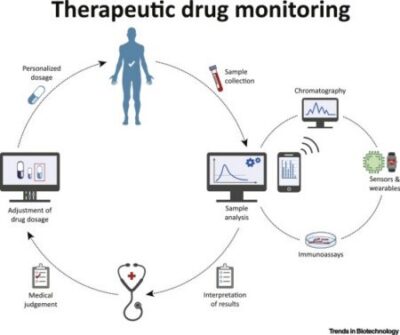
For any specific drug, higher blood concentrations naturally yield better efficacy until a therapeutic ceiling or effect saturation is reached. Invariably, however, higher blood concentrations also increase the likelihood of more frequent and severe adverse effects. Consequently, an optimal therapeutic window of blood concentrations can be established for all drugs. Ideally, and fortunately for most medications, this therapeutic window is wide enough to ensure both sufficient efficacy and tolerable side effects, thereby eliminating the need for continual drug monitoring. Certain classes of drugs have a narrow therapeutic index, meaning that concentrations slightly too high result in toxicity, while concentrations slightly too low risk a loss of efficacy. Furthermore, patient-specific differences in drug absorption, distribution, metabolism, and elimination introduce additional variability. In these cases, monitoring blood drug concentrations provides an avenue for clinical intervention, allowing healthcare providers to adjust drug doses or alter dosing intervals. Using Therapeutic Drug Monitoring (TDM) to adjust doses, manage acute adverse reactions, or rule out insufficient drug exposure in cases of poor efficacy is highly rational. For example, immunosuppressant drugs, like cyclosporine and tacrolimus, are commonly used with therapeutic blood monitoring to prevent transplant rejection and manage drug related toxicity. However, using TDM for continuous dose adjustments to keep long-term blood exposure within a strict range to optimize the risk-benefit profile remains controversial. (Julia M Barbarino 1, 2013 Oct).
The Concentration Paradox: Why Higher Doses, Not Blood Levels, Optimize Kidney Protection
As shown in figure 1 the publication by Opelz (Opelz):
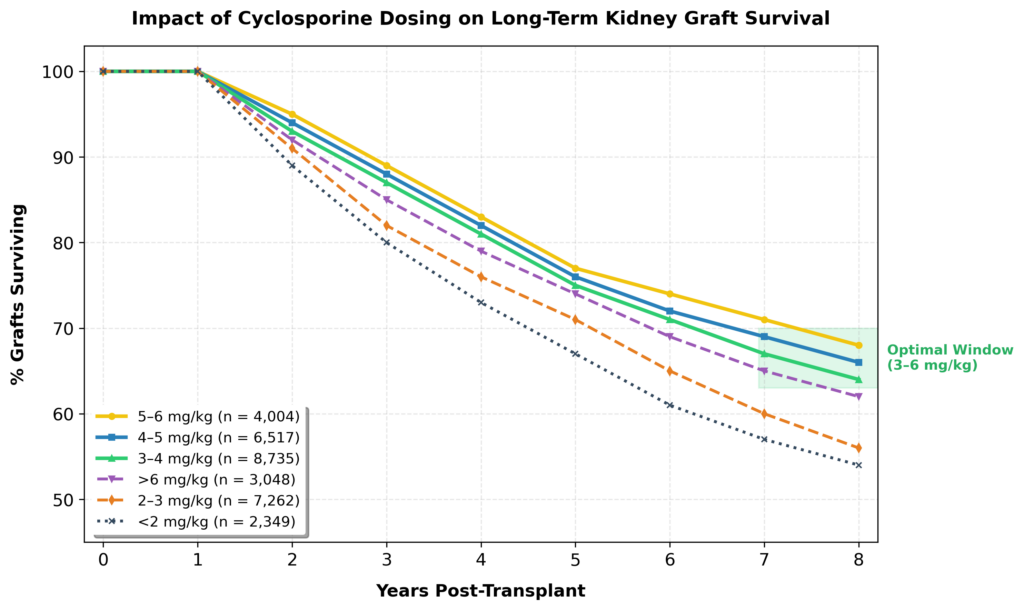
the renal graft survival rates over 8 years by large post-marketing surveys have demonstrated that the optimal outcome to protect against renal transplant rejection is achieved with dose levels between 3 and 5 mg/kg, despite the blood concentrations of cyclosporine were therapeutically monitored to adjust cyclosporine dose for the “desired” window of between 50 and 200 ng/mL from 1 month post-transplant to maintenance beyond 1 yr (FDA, Cyclosporine product lable, 2013). Conversely, trying to force blood exposure into the manufacturer-specified concentration window using doses below 2 or above 6 mg/kg yielded inferior transplant protection due to either insufficient exposure or overt toxicity.
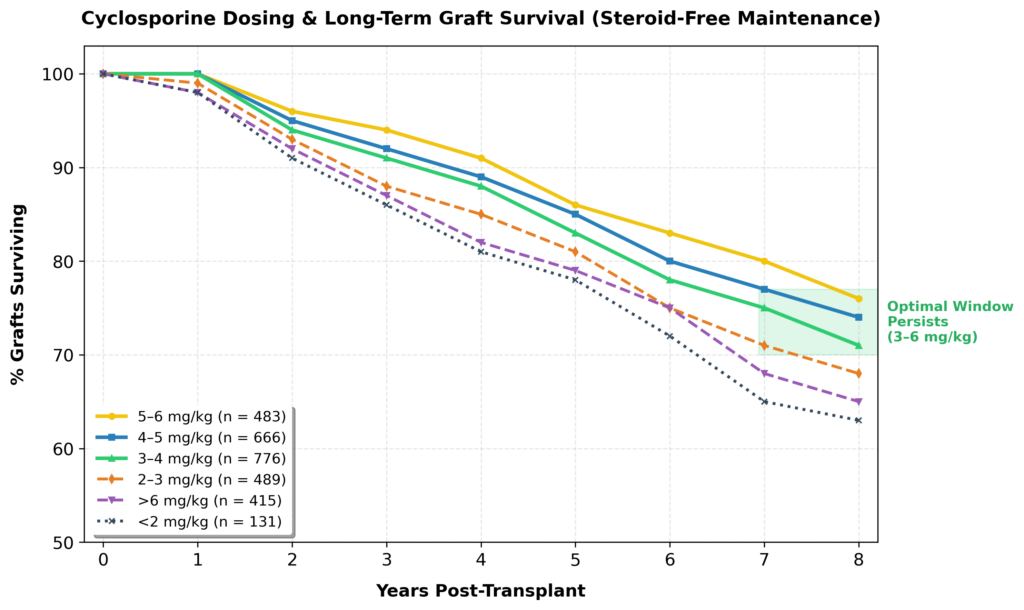
The disconnect between blood concentrations of cyclosporine and its desired efficacy for transplant graft survival balanced with toxicities are robust, was evident in renal transplant patients taking cyclosporine with steroids and without steroids (steroid-free maintenance), as shown in the figure 2 of the Oplez 1998 publication), reproduced below:
Similarly, optimal outcomes for protecting renal transplants from rejection were achieved with higher doses of tacrolimus even when the blood concentration of tacrolimus were maintained within the “desired” therapeutic window (Caner Süsal 1, 2025 Nov).
Impact of non-equilibrium disposition on TDM, efficacy and safety
The premise of Therapeutic Drug Monitoring (TDM) implicitly relies on the assumption that circulating blood concentrations proportionally reflect tissue levels. This framework conceptualizes the body under well-stirred tank conditions, where peripheral tissues and central blood maintain a continuous distribution equilibrium. However, the frequent disconnect between clinical outcomes and the “optimal” therapeutic ranges of long-term cyclosporine and tacrolimus therapy directly challenges this assumption, casting doubt on the validity of a true blood-to-tissue equilibrium during repeated dosing. For deep tissue targets far removed from the vascular circulation, standard blood or plasma drug levels often fall short. Consequently, higher doses and blood concentrations may be required to generate the steep concentration gradient necessary to drive adequate local drug exposure in target tissues operating far from thermodynamic equilibrium.
In summary, when compounds exhibit non-equilibrium distribution between the systemic circulation and peripheral tissues, routine monitoring of steady-state blood concentrations becomes fundamentally futile. At best, chasing these arbitrary blood targets offers a false sense of security; at worst, it provides highly misleading clinical guidance. Ultimately, an overreliance on circulating blood metrics misguides the precisely tailored interventions required to manage altered therapeutic efficacy or to anticipate the silent emergence of severe toxicities during long-term, repeated dosing.
References:
1. Julia M Barbarino et. al. (2013 Oct). PharmGKB summary: cyclosporine and tacrolimus pathways. Pharmacogenet Genomics, 23(10):563-85. doi: 10.1097/FPC.0b013e328364db84
2. Opelz, G. CYA Dosage and Graft Coutcome. Steriod-free Maintenance . Collaborative Transplant Study, https://www.ctstransplant.org/public/newsletters.shtml.
3. Caner Süsal et. al. (2025 Nov). Hidden in Plain Sight: High Tacrolimus Metabolism Doubles Kidney Transplant Failure and Drives Infection Related Mortality. Transpl Int., 3;38:15207. doi: 10.3389/ti.2025.15207.
The post above is an excerpt from the upcoming book, Pharmacology Under Non-Equilibrium Disposition. Have a question or thoughts on this section? Leave a comment below.
